World Health Organization (WHO) recognized Centre of Excellence
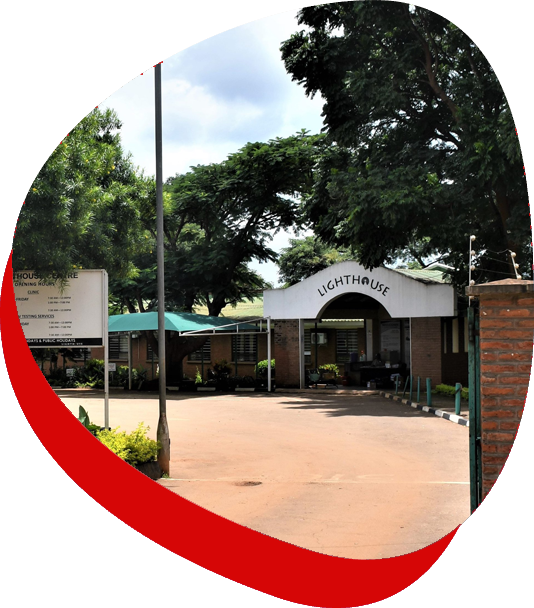
Welcome to Lighthouse Trust, Malawi.
Provide improved quality treatment, care and support services for PLHIV in Malawi.
Lighthouse is a registered public trust that exists to contribute to Malawi’s national response to HIV as a model in providing a continuum of high quality care and building capacity in the health sector.
Lighthouse Trust, a World Health Organization (WHO) recognized Centre of Excellence, works in close coordination with the Ministry of Health (MOH) to operate two large integrated HIV testing, treatment and care clinics in Lilongwe, Malawi: one on the campus of Kamuzu Central Hospital (KCH) and another at Bwaila Hospital under the Lilongwe District Health Office.
HIV prevention, Treatment, Care and Support
Making a Difference
Lighthouse also provides direct service delivery and technical support in HIV care through the District Support Program in Mzimba North and South, Rumphi, Nkhata-Bay, Likoma and Ntchisi by rapidly taking key national policies to scale.
HIV (Human Immunodeficiency Virus) is a virus that attacks your body’s immune system, which is crucial to fighting off infections and diseases. Specifically, HIV invades important cells in your body, uses those cells to make more copies of itself, and then destroys them. If left untreated, HIV may lead to an AIDS (Acquired Immune Deficiency Syndrome) diagnosis.
HIV is transmitted through the following bodily fluids: blood, semen, pre-seminal fluid, vaginal fluid, rectal fluid, and breast milk. Most commonly, HIV is transmitted through condomless anal or vaginal sex or through injection drug use. You cannot get HIV from kissing, hugging or other types of non-sexual physical contact.
While HIV is more common in some communities than in others, anyone can acquire HIV through behaviors that are likely to transmit the virus. It’s what you do, not who you are, that increases your chances of contracting HIV.
There are several different ways to test for HIV, from oral swabs to home testing kits. There are also thousands of locations across the country where you can get an HIV test at little or no cost to you.